espresso.compare

Breville vs Ninja

Brand comparison · 13 machines

Quick verdict

Breville publishes brewing specifications — boiler type, portafilter size, extraction pressure — for every machine. Ninja publishes drink modes. If you want to know what a machine does to coffee before you buy it, that difference is the comparison.

Breville

Australia · founded 1932

Machines tracked
12
Published price range
$300–$2,000
Types made
Semi-automatic
With built-in grinder
7
Automatic milk
5
58 mm commercial group
3
PID temperature control
5
Highest scoring
Oracle Touch

Ninja

United States · founded 2003

Machines tracked
1
Published price range
$600–$600
Types made
Semi-automatic
With built-in grinder
1
Automatic milk
1
58 mm commercial group
0
PID temperature control
0
Highest scoring
Luxe Café

Breville: warranty, parts and repairability

Breville publishes a limited product warranty on each US product page; terms vary by model and are stated at the point of sale.

Breville operates a US service network and sells first-party replacement parts and cleaning consumables directly.

Baskets, seals, water filters and cleaning tablets are stocked as first-party parts. The 54 mm portafilter used below the Dual Boiler is a Breville size, so third-party basket and tamper choice is narrower than for 58 mm machines.

Ninja: warranty, parts and repairability

Ninja publishes warranty terms on its US product pages and support centre.

SharkNinja runs a US support centre with owner's guides and quick-start guides per model series.

Serviceability detail is limited on Ninja's published materials; the machine is supported through SharkNinja's own channel rather than a third-party parts ecosystem.

Top Breville machines

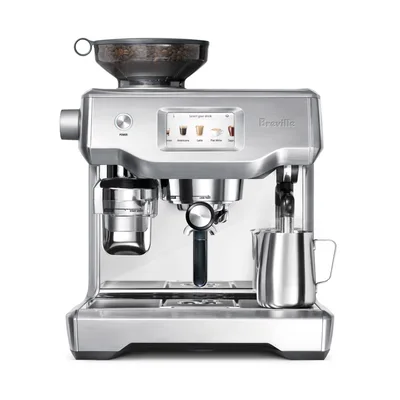
Breville Oracle Touch semi-auto espresso machine, front view
Semi-automatic

Discontinued, and the most automated dual-boiler 58 mm machine Breville has made — grinder, tamping and milk all handled.

  • Semi-automatic
  • Dual boiler
  • PID
  • Grinder · 45 settings
  • 58mm portafilter
  • Steam wand
Pump:15 bar(marketing)·Brews at:~9 bar(what the coffee actually sees)
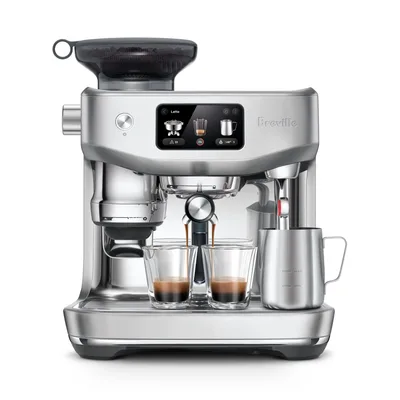
Breville Oracle Jet semi-auto espresso machine, front view
Semi-automatic

58 mm portafilter, 45 grind settings and Auto MilQ automatic texturing with alternative-milk profiles in one touchscreen machine.

  • Semi-automatic
  • Grinder · 45 settings
  • 58mm portafilter
  • Steam wand
Pump pressure: — (not published by the manufacturer) · espresso extracts at ~9 bar regardless.
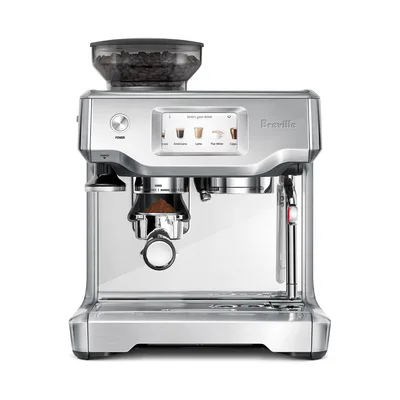
Breville Barista Touch semi-auto espresso machine, front view
Semi-automatic

Grinder, ThermoJet and Auto MilQ automatic texturing behind a touchscreen — the least manual machine that still uses a portafilter.

  • Semi-automatic
  • ThermoJet
  • Grinder · 30 settings
  • 54mm portafilter
  • 3s heat-up
  • Steam wand
Pump:15 bar(marketing)·Brews at:~9 bar(what the coffee actually sees)
Top Ninja machines

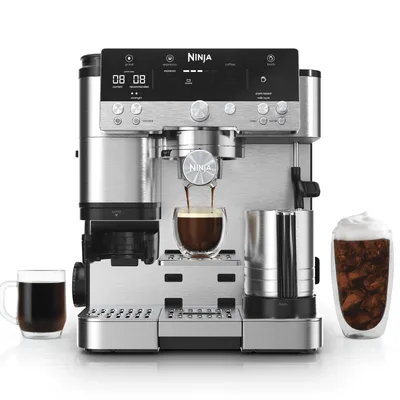
Ninja Luxe Café Premier semi-auto espresso machine, front view
Semi-automatic

Three brewers in one body — espresso, drip and cold brew off a single 25-setting conical burr grinder, with hands-free frothing.

  • Semi-automatic
  • Grinder · 25 settings
  • Automatic frother
Pump pressure: — (not published by the manufacturer) · espresso extracts at ~9 bar regardless.

Frequently asked

Is Breville or Ninja better?
Breville publishes brewing specifications — boiler type, portafilter size, extraction pressure — for every machine. Ninja publishes drink modes. If you want to know what a machine does to coffee before you buy it, that difference is the comparison.
Which brand has more machines with a built-in grinder?
Breville has 7 of 12 in our database; Ninja has 1 of 1.
Which is easier to get parts for?
Breville: Baskets, seals, water filters and cleaning tablets are stocked as first-party parts. The 54 mm portafilter used below the Dual Boiler is a Breville size, so third-party basket and tamper choice is narrower than for 58 mm machines. Ninja: Serviceability detail is limited on Ninja's published materials; the machine is supported through SharkNinja's own channel rather than a third-party parts ecosystem.