espresso.compare

The Best Espresso Machines Under $1,000

18 machines · Updated · Ranked on published specs

This band is where the espresso market stops being one product and splits into three. The first path is the all-in-one: a machine with an integrated conical burr grinder and a PID-controlled thermocoil, which is the single most popular espresso configuration sold in the United States. The second is the enthusiast path: a smaller, plainer machine with a brass boiler and a 58 mm commercial portafilter, no grinder, sold to people who intend to buy a serious grinder separately and keep the machine for fifteen years. The third is the bean-to-cup path, where the portafilter disappears entirely and the machine grinds, doses, brews and often steams milk without you touching anything. These three machines have almost nothing in common except a price. Ranking them against each other would be meaningless, which is why our scores compare each machine against others of its own type — and why you should decide which path you are on before reading any ranking at all.

This list mixes machine types, so the ranking score is computed against the other machines on this page rather than within each type. Every card also shows the machine's within-type score, labelled with its type — that is the number to use when comparing it against others of the same kind.

The ranking

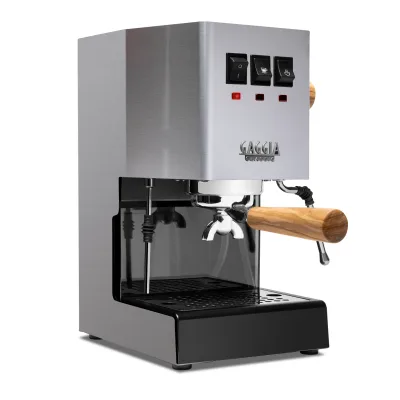
#1Gaggia Classic Pro E24 semi-auto espresso machine, front view
Semi-automatic65/100 among semi-automatic machines

A lead-free brass boiler and a 58 mm commercial portafilter, with the over-pressure valve set to 9 bar at the puck from the factory.

  • Semi-automatic
  • Single boiler
  • No PID
  • 58mm portafilter
  • Commercial-style steam wand
Pump:15 bar(marketing)·Brews at:~9 bar(what the coffee actually sees)
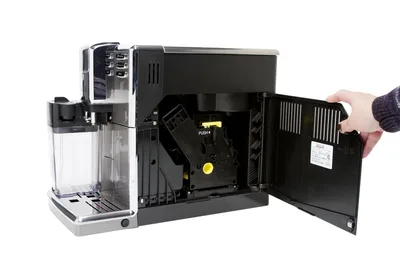
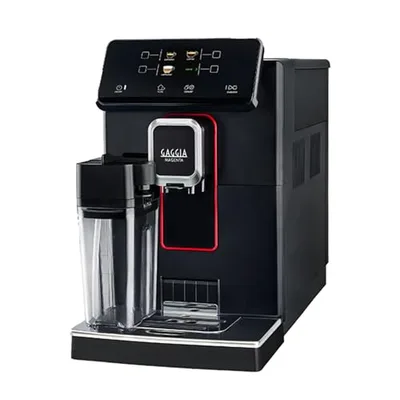
#2Gaggia Magenta Prestige bean-to-cup espresso machine, front view
Super-automatic62/100 among super-automatic machines

Under nine inches wide and 17 lb, with the same automatic 0.5 litre milk carafe as the rest of the Prestige line.

  • Super-automatic
  • Grinder · 5 settings
  • Automatic milk carafe
  • Removable brew group
Pressure managed automatically — brewing pressure is internal and not user-adjustable.
#3Gaggia Anima Prestige bean-to-cup espresso machine, front view
Super-automatic63/100 among super-automatic machines

Ceramic flat burrs and an integrated 0.5 litre milk carafe that froths automatically, in Gaggia's smallest super-auto body.

  • Super-automatic
  • Grinder · 5 settings
  • Automatic milk carafe
  • Removable brew group
Pressure managed automatically — brewing pressure is internal and not user-adjustable.
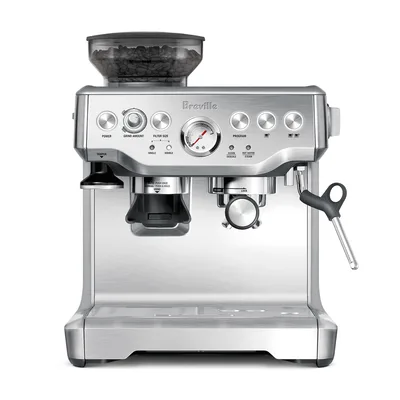
#4Breville Barista Express semi-auto espresso machine, front view
Semi-automatic55/100 among semi-automatic machines

The default first espresso machine in the US: PID-controlled thermocoil, integrated conical burr grinder, 16 grind settings, one footprint.

  • Semi-automatic
  • Thermocoil
  • PID
  • Grinder · 16 settings
  • 54mm portafilter
  • Steam wand
Pump:15 bar(marketing)·Brews at:~9 bar(what the coffee actually sees)
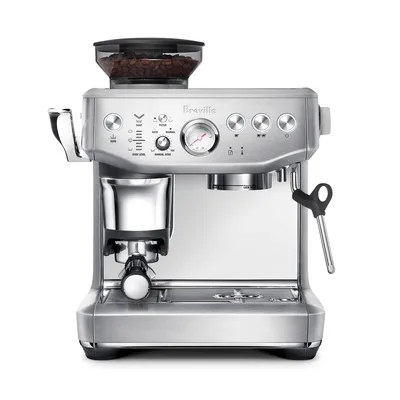
#5Breville Barista Express Impress semi-auto espresso machine, front view
Semi-automatic53/100 among semi-automatic machines

A Barista Express that doses and tamps for you with an assisted lever, and gives you 25 grind settings instead of 16.

  • Semi-automatic
  • Thermocoil
  • PID
  • Grinder · 25 settings
  • 54mm portafilter
  • Steam wand
Pump:15 bar(marketing)·Brews at:~9 bar(what the coffee actually sees)
#6Dedica Maestro Plus Espresso Machine with Automatic Steam Wand — semi-auto espresso machine, front view
Semi-automatic68/100 among semi-automatic machines

A Dedica with an automatic steam wand — milk texturing without the learning curve, still in a compact body.

  • Semi-automatic
  • Steam wand
Pump:15 bar(marketing)·Brews at:~9 bar(what the coffee actually sees)
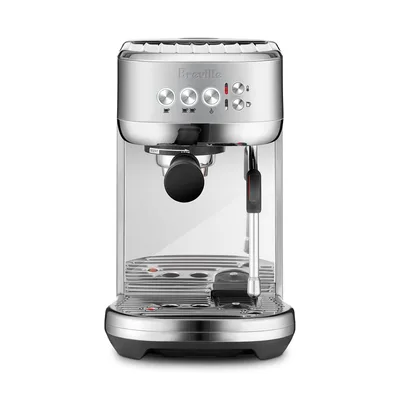
#7Breville Bambino Plus semi-auto espresso machine, front view
Semi-automatic39/100 among semi-automatic machines

A Bambino with the milk problem solved: the wand textures automatically across three temperatures and three foam levels.

  • Semi-automatic
  • ThermoJet
  • 54mm portafilter
  • 3s heat-up
  • Steam wand
Pump:15 bar(marketing)·Brews at:~9 bar(what the coffee actually sees)
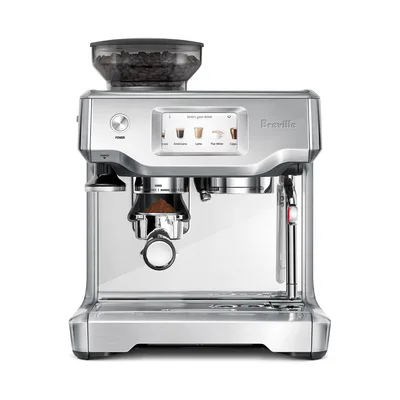
#8Breville Barista Touch semi-auto espresso machine, front view
Semi-automatic57/100 among semi-automatic machines

Grinder, ThermoJet and Auto MilQ automatic texturing behind a touchscreen — the least manual machine that still uses a portafilter.

  • Semi-automatic
  • ThermoJet
  • Grinder · 30 settings
  • 54mm portafilter
  • 3s heat-up
  • Steam wand
Pump:15 bar(marketing)·Brews at:~9 bar(what the coffee actually sees)
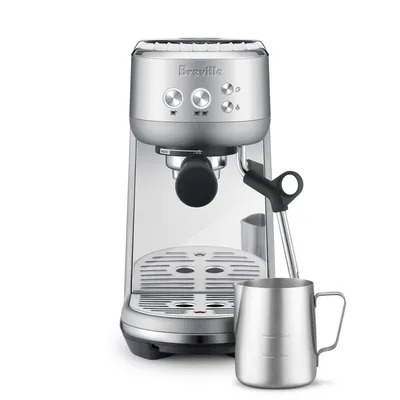
#9Breville Bambino semi-auto espresso machine, front view
Semi-automatic32/100 among semi-automatic machines

The smallest serious 54 mm machine Breville sells — three-second heat-up, no grinder, no compromise on the shot.

  • Semi-automatic
  • ThermoJet
  • 54mm portafilter
  • 3s heat-up
  • Steam wand
Pump:15 bar(marketing)·Brews at:~9 bar(what the coffee actually sees)
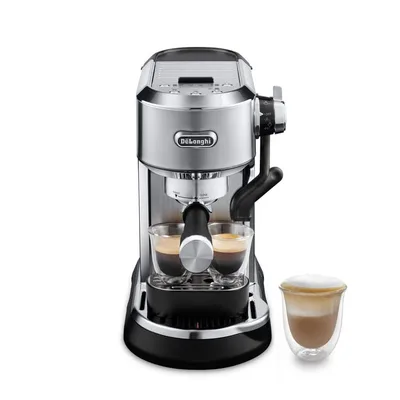
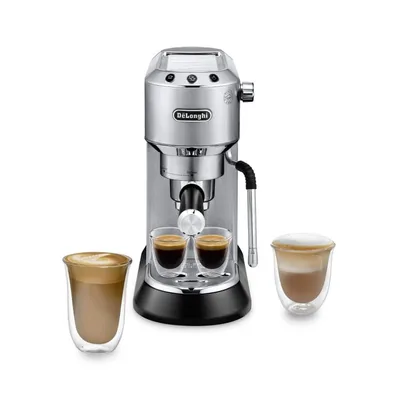
#10Dedica Arte Espresso Machine — semi-auto espresso machine, front view
Semi-automatic46/100 among semi-automatic machines

The same 5.9-inch-wide body as the Dedica Deluxe, with a manual steam wand instead of an assisted frother.

  • Semi-automatic
  • Steam wand
Pump:15 bar(marketing)·Brews at:~9 bar(what the coffee actually sees)

Compare every machine on this list

All machines on this ranking, sortable by score, price and key specifications
Machine
Gaggia Classic Pro E249365 (semi-automatic)$451Semi-automaticSingle boiler15 bar → ~9 barNoManual
Gaggia Magenta Prestige8262 (super-automatic)$649Super-automatic5 settingsAutomatic
Gaggia Anima Prestige7963 (super-automatic)$849Super-automatic5 settingsAutomatic
Breville Barista Express7255 (semi-automatic)$660Semi-automaticThermocoil15 bar → ~9 bar16 settingsManual
Breville Barista Express Impress6953 (semi-automatic)$800Semi-automaticThermocoil15 bar → ~9 bar25 settingsManual
De'Longhi Dedica Maestro Plus6868 (semi-automatic)$426Semi-automatic15 bar → ~9 barNoAutomatic
Breville Bambino Plus5839 (semi-automatic)$500Semi-automaticThermoJet15 bar → ~9 barNoAutomatic
Breville Barista Touch5557 (semi-automatic)$957Semi-automaticThermoJet15 bar → ~9 bar30 settingsAutomatic
Breville Bambino5232 (semi-automatic)$300Semi-automaticThermoJet15 bar → ~9 barNoManual
De'Longhi Dedica Arte4946 (semi-automatic)$269Semi-automatic15 bar → ~9 barNoManual
Breville Barista Pro4640 (semi-automatic)$835Semi-automaticThermoJet15 bar → ~9 bar30 settingsManual
Ninja Luxe Café Premier3538 (semi-automatic)$599Semi-automatic25 settingsAutomatic
De'Longhi Magnifica Evo2833 (super-automatic)$750Super-automaticThermoblock15 bar → ~9 bar13 settingsManual
De'Longhi La Specialista Arte Evo2633 (semi-automatic)$500Semi-automaticThermoblock15 bar → ~9 bar8 settingsManual
De'Longhi La Specialista Arte2624 (semi-automatic)$500Semi-automaticThermoblock15 bar → ~9 bar8 settingsManual
KitchenAid KES6503 Metal Semi-Automatic Espresso Machine2525 (semi-automatic)$250Semi-automaticThermocoilNoManual
De'Longhi Stilosa2043 (semi-automatic)$150Semi-automatic15 bar → ~9 barNoManual
De'Longhi Dedica Deluxe1619 (semi-automatic)$249Semi-automatic15 bar → ~9 barNoManual

The pump column shows the manufacturer's advertised figure and the ~9 bar that actually reaches the coffee.

What to look for

If you are choosing the all-in-one path, the specifications that separate machines are grind-setting count, whether the heating system is a PID-controlled thermocoil or an instant-heat thermoblock, and whether milk texturing is manual or automatic. More grind settings give finer control over extraction. A PID thermocoil holds temperature better through a long shot; an instant-heat system gets you a drink faster from cold. Automatic milk removes the hardest skill in home espresso, at the cost of ever learning it.

If you are choosing the enthusiast path, look for three things and ignore the rest: a brass or stainless boiler, a 58 mm commercial group, and PID. Brass holds heat, which is what keeps temperature stable during extraction. A 58 mm group means every basket, tamper, screen and gasket on the market fits, forever. PID means you set a temperature and get that temperature. A machine with these three costs about the same as an all-in-one and comes with no grinder, which is the trade: you are buying a chassis that will outlast several grinders.

If you are choosing bean-to-cup, the differentiators are the milk system and the brew group. An integrated carafe that froths automatically makes a cappuccino at one button; a manual wand on a super-automatic is a hybrid that satisfies nobody. A removable brew group that you rinse under the tap is the single most important serviceability feature on this kind of machine — sealed brew groups turn routine cleaning into a service appointment.

Across all three paths, water is the variable nobody plans for and everybody eventually pays for. Scale is what ends these machines.
Frequently asked

Is a machine with a built-in grinder worth it?
It is worth it if you value counter space and one-box simplicity. A standalone grinder at the same money will usually be better, but it needs its own footprint and its own budget line.
Should I buy a semi-automatic or a super-automatic under $1,000?
Ask how you want to spend the four minutes. A semi-automatic asks you to grind, dose, tamp and steam and rewards you with control. A super-automatic asks for a button press. Neither is an upgrade over the other.
Does PID temperature control actually matter?
Yes, more than pump pressure or wattage. Espresso extraction is sensitive to temperature within a few degrees; a thermostat cycles around its setpoint, a PID holds it. It is the feature most likely to make two shots taste the same.
What water should I use?
Filtered water with some mineral content — not distilled, which extracts poorly and can corrode boilers, and not hard tap water, which scales. Many machines take a manufacturer water filter that handles this for you.

Other rankings

Affiliate disclosure: as an Amazon Associate we earn from qualifying purchases. Rankings are computed from specifications and are never sold. Full disclosure.