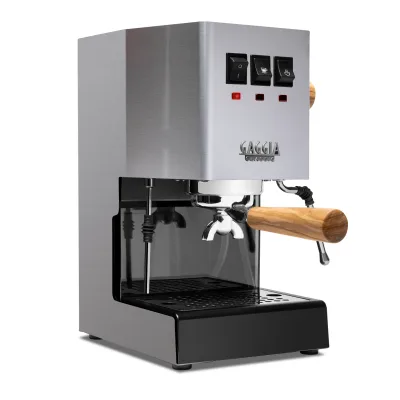
A lead-free brass boiler and a 58 mm commercial portafilter, with the over-pressure valve set to 9 bar at the puck from the factory.
- Semi-automatic
- Single boiler
- No PID
- 58mm portafilter
- Commercial-style steam wand
27 machines · Updated · Ranked on published specs
Two thousand dollars is where espresso machines stop being appliances and start being equipment. The change is physical before it is anything else: machines in this band weigh two to four times what a mainstream machine weighs, because the boilers are brass or stainless rather than a coil in an aluminium block, and mass is what keeps temperature steady. Dual boilers appear, which means the machine no longer has to choose between brewing and steaming. Heat exchangers appear, which achieves something similar through a different route. Groups become 58 mm commercial hardware with standard gaskets and screens. Heat-up goes from three seconds to seven or ten minutes, which is the price of that mass and the reason these machines are usually left switched on. At the same time, the automatic end of the market reaches its own ceiling here: bean-to-cup machines with two heating circuits, cold milk texturing and drink menus running to dozens of options. Both ends of this band are excellent. They are also, again, entirely different products.
This list mixes machine types, so the ranking score is computed against the other machines on this page rather than within each type. Every card also shows the machine's within-type score, labelled with its type — that is the number to use when comparing it against others of the same kind.

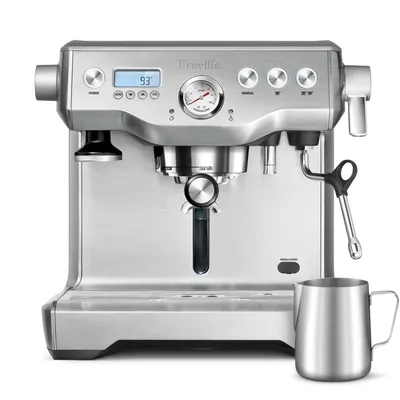
A lead-free brass boiler and a 58 mm commercial portafilter, with the over-pressure valve set to 9 bar at the puck from the factory.

Stainless dual boilers, PID and a 58 mm commercial portafilter — the point where Breville stops using its own 54 mm standard.

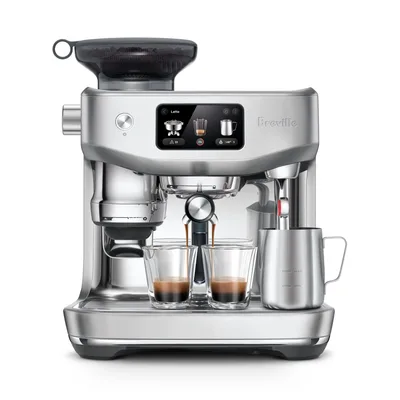
58 mm portafilter, 45 grind settings and Auto MilQ automatic texturing with alternative-milk profiles in one touchscreen machine.

Under nine inches wide and 17 lb, with the same automatic 0.5 litre milk carafe as the rest of the Prestige line.

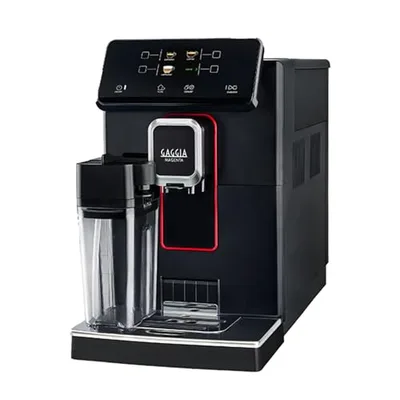
Ceramic flat burrs and an integrated 0.5 litre milk carafe that froths automatically, in Gaggia's smallest super-auto body.

Ten grind settings — twice the Magenta's — a 300 g hopper and an automatic milk carafe, made in Italy.

The top of De'Longhi's automatic range: dual heating, a 19 bar pump and cold milk texturing as well as hot.

A colour-touch Dinamica with app connectivity and a 19 bar pump, aimed at households with several drink preferences.

The default first espresso machine in the US: PID-controlled thermocoil, integrated conical burr grinder, 16 grind settings, one footprint.

Swappable bean hoppers are the point: change between two coffees without purging, with automatic milk on top.
| Machine | ||||||||
|---|---|---|---|---|---|---|---|---|
| Gaggia Classic Pro E24 | 89 | 65 (semi-automatic) | $451 | Semi-automatic | Single boiler | 15 bar → ~9 bar | No | Manual |
| Breville Dual Boiler | 88 | 53 (semi-automatic) | $1,700 | Semi-automatic | Dual boiler | 15 bar → ~9 bar | No | Manual |
| Breville Oracle Jet | 81 | 69 (semi-automatic) | $2,000 | Semi-automatic | — | — | 45 settings | Automatic |
| Gaggia Magenta Prestige | 80 | 62 (super-automatic) | $649 | Super-automatic | — | — | 5 settings | Automatic |
| Gaggia Anima Prestige | 78 | 63 (super-automatic) | $849 | Super-automatic | — | — | 5 settings | Automatic |
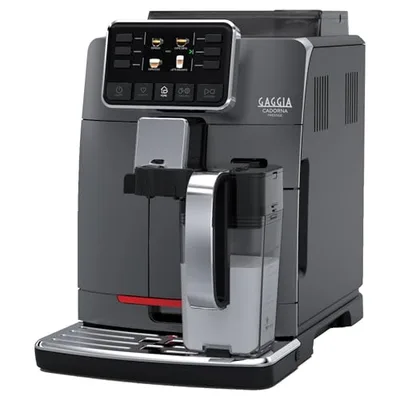
| Gaggia Cadorna Prestige | 76 | 60 (super-automatic) | $1,049 | Super-automatic | — | — | 10 settings | Automatic |
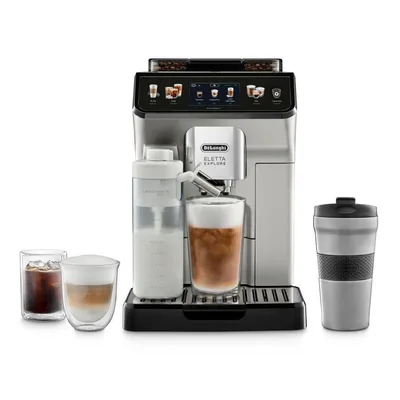
| De'Longhi Eletta Explore | 65 | 39 (super-automatic) | $2,000 | Super-automatic | Thermoblock | 19 bar → ~9 bar | 13 settings | Automatic |
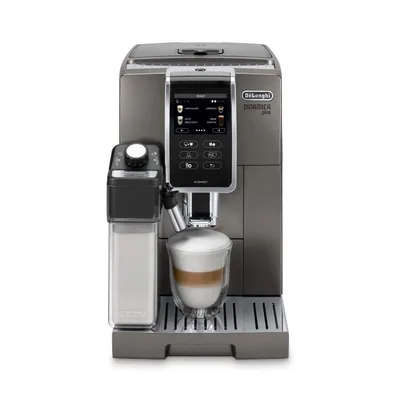
| De'Longhi Dinamica Plus | 64 | 46 (super-automatic) | $1,448 | Super-automatic | — | 19 bar → ~9 bar | 13 settings | Automatic |
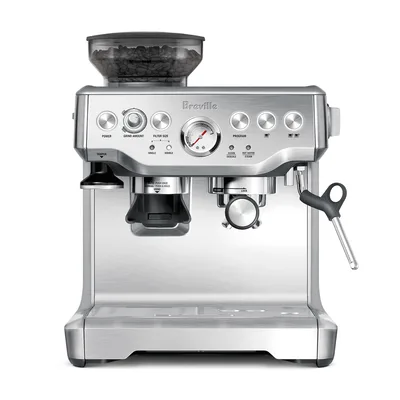
| Breville Barista Express | 62 | 55 (semi-automatic) | $660 | Semi-automatic | Thermocoil | 15 bar → ~9 bar | 16 settings | Manual |
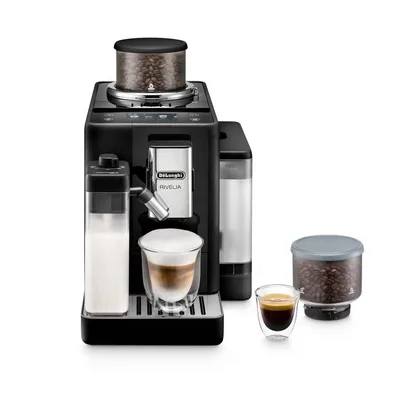
| De'Longhi Rivelia | 61 | 35 (super-automatic) | $1,500 | Super-automatic | Thermoblock | 19 bar → ~9 bar | 13 settings | Automatic |
| De'Longhi Dedica Maestro Plus | 60 | 68 (semi-automatic) | $426 | Semi-automatic | — | 15 bar → ~9 bar | No | Automatic |
| Breville Barista Express Impress | 60 | 53 (semi-automatic) | $800 | Semi-automatic | Thermocoil | 15 bar → ~9 bar | 25 settings | Manual |
| Breville Barista Touch | 49 | 57 (semi-automatic) | $957 | Semi-automatic | ThermoJet | 15 bar → ~9 bar | 30 settings | Automatic |
| Breville Bambino Plus | 47 | 39 (semi-automatic) | $500 | Semi-automatic | ThermoJet | 15 bar → ~9 bar | No | Automatic |
| Breville Barista Touch Impress | 46 | 46 (semi-automatic) | $1,500 | Semi-automatic | ThermoJet | — | 30 settings | Automatic |
| KitchenAid KF8 Fully Automatic Espresso Machine | 40 | 37 (super-automatic) | $1,800 | Super-automatic | — | — | — | Automatic |
| Breville Barista Pro | 39 | 40 (semi-automatic) | $835 | Semi-automatic | ThermoJet | 15 bar → ~9 bar | 30 settings | Manual |
| Breville Bambino | 39 | 32 (semi-automatic) | $300 | Semi-automatic | ThermoJet | 15 bar → ~9 bar | No | Manual |
| De'Longhi Dedica Arte | 38 | 46 (semi-automatic) | $269 | Semi-automatic | — | 15 bar → ~9 bar | No | Manual |
| De'Longhi La Specialista Maestro with Cold Brew | 33 | 47 (semi-automatic) | $1,300 | Semi-automatic | Thermoblock | 19 bar → ~9 bar | 15 settings | Automatic |
| Ninja Luxe Café Premier | 29 | 38 (semi-automatic) | $599 | Semi-automatic | — | — | 25 settings | Automatic |
| De'Longhi La Specialista Arte Evo | 23 | 33 (semi-automatic) | $500 | Semi-automatic | Thermoblock | 15 bar → ~9 bar | 8 settings | Manual |
| De'Longhi Magnifica Evo | 23 | 33 (super-automatic) | $750 | Super-automatic | Thermoblock | 15 bar → ~9 bar | 13 settings | Manual |
| De'Longhi La Specialista Arte | 23 | 24 (semi-automatic) | $500 | Semi-automatic | Thermoblock | 15 bar → ~9 bar | 8 settings | Manual |
| KitchenAid KES6503 Metal Semi-Automatic Espresso Machine | 21 | 25 (semi-automatic) | $250 | Semi-automatic | Thermocoil | — | No | Manual |
| De'Longhi Stilosa | 18 | 43 (semi-automatic) | $150 | Semi-automatic | — | 15 bar → ~9 bar | No | Manual |
| De'Longhi Dedica Deluxe | 16 | 19 (semi-automatic) | $249 | Semi-automatic | — | 15 bar → ~9 bar | No | Manual |
The pump column shows the manufacturer's advertised figure and the ~9 bar that actually reaches the coffee.
The dual-boiler versus heat-exchanger question is the defining one at this price. A dual-boiler machine has separate boilers for brewing and steaming, each independently controlled, which means you can set brew temperature precisely and steam at full power at the same time. A heat exchanger runs cold water through a pipe passing through the steam boiler, heating it in transit — one boiler doing both jobs, simultaneously, with fewer parts. Traditional heat exchangers require a small ritual called temperature surfing to land the brew temperature; newer designs regulate from the group instead and remove that. Dual boilers give more control, heat exchangers give more simplicity, and both are a genuine step beyond a single boiler.
Check what is adjustable. An adjustable expansion or over-pressure valve lets you set brew pressure at the puck rather than accepting the factory setting. Selectable or programmable pre-infusion wets the puck at low pressure before extraction, which reduces channelling. Machines that publish these features are telling you they expect the owner to use them.
Check the plumbing option. Machines that can be plumbed to mains water and have rotary pumps are quieter, never need refilling and are built on commercial architecture. It is worth knowing whether a machine can be plumbed even if you will not plumb it, because it indicates the class of hardware inside.
Finally, weigh the thing. In this price band, weight is not a proxy for quality by accident: it is boiler mass and steel, and it is what the extra money mostly buys.
Affiliate disclosure: as an Amazon Associate we earn from qualifying purchases. Rankings are computed from specifications and are never sold. Full disclosure.