A Dedica with an automatic steam wand — milk texturing without the learning curve, still in a compact body.
- Semi-automatic
- Steam wand
8 machines · Updated · Ranked on published specs
This is the most competitive price band in espresso and the one where the marketing is loudest. Machines here are built around thermoblock or ThermoJet heating: water heats on demand, so the machine is ready in seconds, but the thermal mass that keeps temperature steady through a long shot is not there. Boilers are aluminium or coated rather than brass. Portafilters are usually the manufacturer's own size rather than the 58 mm commercial standard. None of that makes these machines bad — several of them will make espresso indistinguishable from a machine costing three times as much, in the right hands, with the right grinder. What it does mean is that the specification differences that matter under $500 are not the ones printed largest on the box. Whether the steam wand is a bare wand or an assisted frother changes what your milk can look like. Whether a grinder is included changes your total cost by two or three hundred dollars. Whether the pump is 15 or 20 bar changes nothing at all.
This list mixes machine types, so the ranking score is computed against the other machines on this page rather than within each type. Every card also shows the machine's within-type score, labelled with its type — that is the number to use when comparing it against others of the same kind.

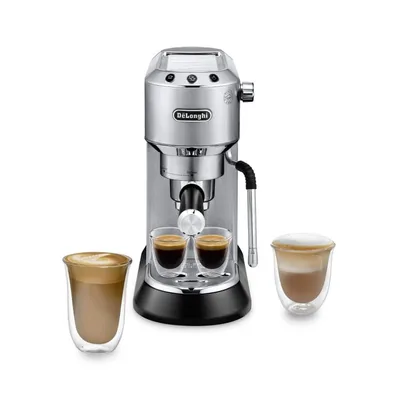
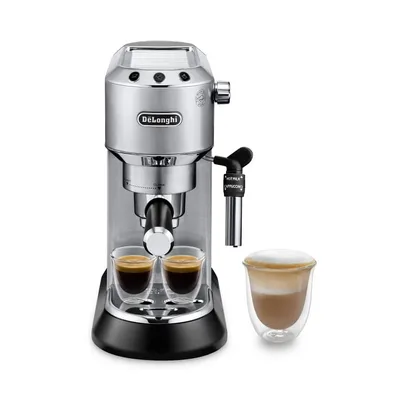
A Dedica with an automatic steam wand — milk texturing without the learning curve, still in a compact body.

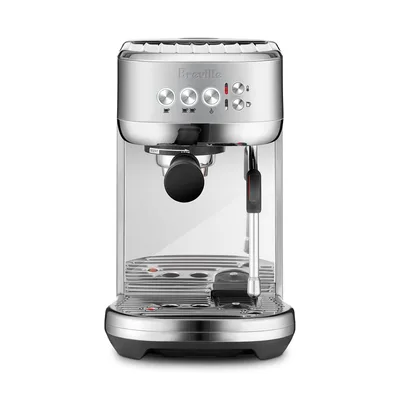
A Bambino with the milk problem solved: the wand textures automatically across three temperatures and three foam levels.

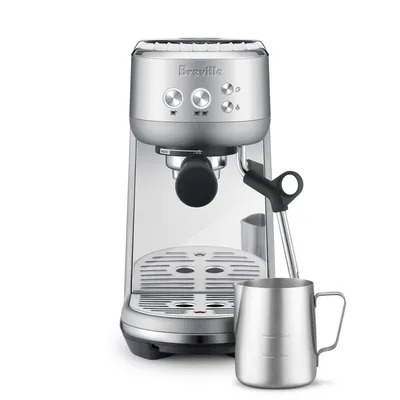
The smallest serious 54 mm machine Breville sells — three-second heat-up, no grinder, no compromise on the shot.

The same 5.9-inch-wide body as the Dedica Deluxe, with a manual steam wand instead of an assisted frother.

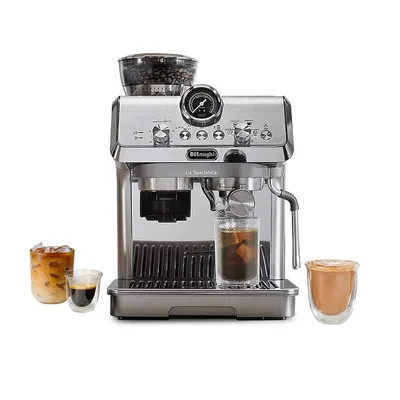
The Arte with cold-extraction brewing added and a higher-wattage element, usually sold below the plain Arte.

A thermocoil machine with dual temperature sensors and both single-wall and pressurized baskets in the box, so it works before you own a grinder and improves once you do.

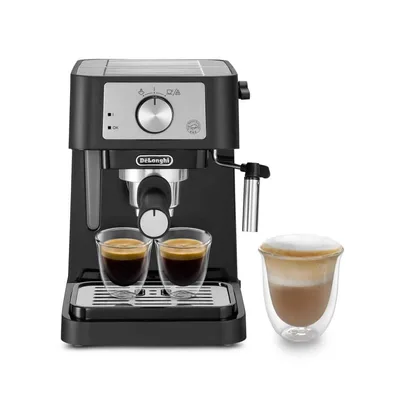
The cheapest espresso machine De'Longhi sells in the US, and an honest one: a 15 bar pump, a steam wand and nothing else.

Under six inches wide — the machine to buy when counter width, not budget, is the binding constraint.
| Machine | ||||||||
|---|---|---|---|---|---|---|---|---|
| De'Longhi Dedica Maestro Plus | 85 | 68 (semi-automatic) | $426 | Semi-automatic | — | 15 bar → ~9 bar | No | Automatic |
| Breville Bambino Plus | 72 | 39 (semi-automatic) | $500 | Semi-automatic | ThermoJet | 15 bar → ~9 bar | No | Automatic |
| Breville Bambino | 67 | 32 (semi-automatic) | $300 | Semi-automatic | ThermoJet | 15 bar → ~9 bar | No | Manual |
| De'Longhi Dedica Arte | 60 | 46 (semi-automatic) | $269 | Semi-automatic | — | 15 bar → ~9 bar | No | Manual |
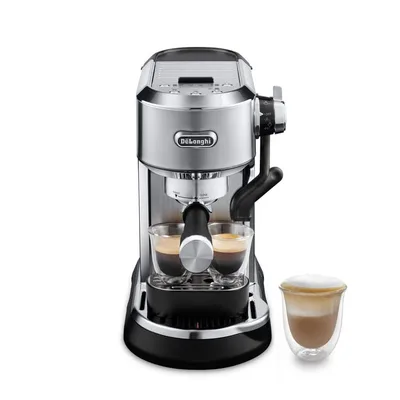
| De'Longhi La Specialista Arte Evo | 38 | 33 (semi-automatic) | $500 | Semi-automatic | Thermoblock | 15 bar → ~9 bar | 8 settings | Manual |
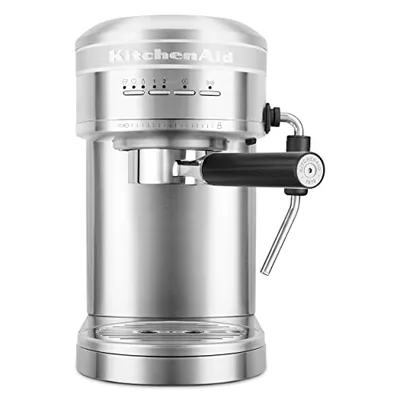
| KitchenAid KES6503 Metal Semi-Automatic Espresso Machine | 37 | 25 (semi-automatic) | $250 | Semi-automatic | Thermocoil | — | No | Manual |
| De'Longhi Stilosa | 25 | 43 (semi-automatic) | $150 | Semi-automatic | — | 15 bar → ~9 bar | No | Manual |
| De'Longhi Dedica Deluxe | 18 | 19 (semi-automatic) | $249 | Semi-automatic | — | 15 bar → ~9 bar | No | Manual |
The pump column shows the manufacturer's advertised figure and the ~9 bar that actually reaches the coffee.
The first question under $500 is total cost, not machine cost. A $300 machine with no grinder and a $200 grinder is a $500 setup; a $500 machine with a grinder built in is also a $500 setup, but the built-in grinder is usually a smaller, simpler unit than a standalone one at the same money. Neither answer is automatically right. If you already own a burr grinder, buy the machine alone and spend more of the budget on it. If you own nothing, an all-in-one is the shorter path to a drinkable shot.
Second, look at the steam wand. Assisted or panarello-style frothers inject air through a sleeve and produce stiff, bubbly foam — fine in a cappuccino, wrong for a flat white or any latte art. A bare steam wand is harder to learn and is the only way to make the fine microfoam that milk drinks actually want. Under $500 this is often the single biggest difference between two machines with otherwise similar specifications.
Third, check whether the included baskets are pressurized. A pressurized (dual-wall) basket creates artificial back-pressure so that almost any coffee produces something that looks like crema. It is a genuinely useful crutch when you are starting with pre-ground coffee, and a hard ceiling once you are not. Machines that ship both single- and dual-wall baskets let you move on later; machines that only take pressurized baskets do not.
Finally, be realistic about heat-up and recovery. These machines reach temperature almost instantly, which is a real convenience, but pulling four drinks back to back will show their limits in a way that pulling one will not.
Affiliate disclosure: as an Amazon Associate we earn from qualifying purchases. Rankings are computed from specifications and are never sold. Full disclosure.