espresso.compare

The Best Semi-Automatic Espresso Machines

32 machines · Updated · Ranked on published specs

Semi-automatic means the machine heats water and runs the pump, and you decide when the shot starts and stops. That definition is broader than most buying guides imply: a $150 Stilosa, a Breville Barista Express with its grinder built in, and a 35 kg Rocket with a rotary pump are all semi-automatic, because on all three you pull the shot yourself. It is the configuration used in every café in the world, scaled down, and it is why this category holds both the cheapest serious machines in our database and the most expensive. The specification differences here are the ones that genuinely change what the machine can do: how many boilers it has and what they are made of, whether a PID holds the brew temperature, whether the group is 58 mm commercial hardware, and whether you can adjust brew pressure and pre-infusion. Some of these machines include a grinder and most do not, and that gap matters more than the price difference suggests: a semi-automatic fed badly ground coffee runs far below its capability. Budget for both, and if forced to choose, favour the grinder.

Every machine here is the same type, so the score you see is the stored within-type score. Scores are not comparable against machines of a different type.

The ranking, by tier

This category covers machines bought for very different reasons, so it is split into the tiers people actually shop within. Each tier is scored against its own members — the number at the top of a tier means “best of these”, not “best of everything”.

All-in-one (grinder built in)

One box, one purchase: the grinder doses straight into the portafilter. Where most people start, and where the money goes furthest if you own nothing yet.

12 machines

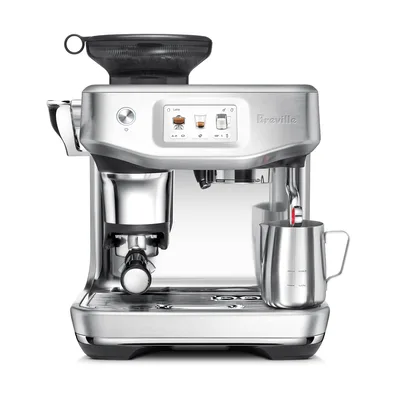
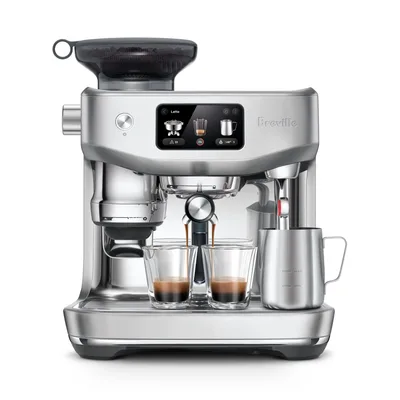
#1Breville Oracle Jet semi-auto espresso machine, front view
Semi-automatic69/100 among semi-automatic machines

58 mm portafilter, 45 grind settings and Auto MilQ automatic texturing with alternative-milk profiles in one touchscreen machine.

  • Semi-automatic
  • Grinder · 45 settings
  • 58mm portafilter
  • Steam wand
Pump pressure: — (not published by the manufacturer) · espresso extracts at ~9 bar regardless.
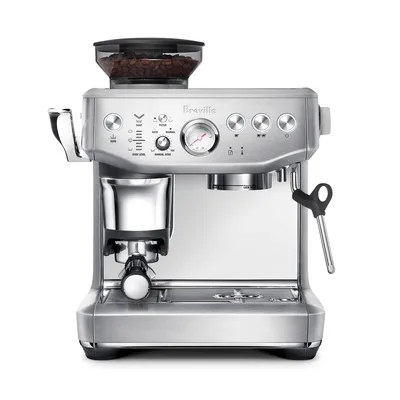
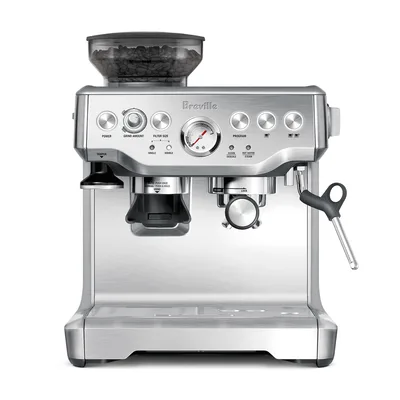
#2Breville Barista Express semi-auto espresso machine, front view
Semi-automatic55/100 among semi-automatic machines

The default first espresso machine in the US: PID-controlled thermocoil, integrated conical burr grinder, 16 grind settings, one footprint.

  • Semi-automatic
  • Thermocoil
  • PID
  • Grinder · 16 settings
  • 54mm portafilter
  • Steam wand
Pump:15 bar(marketing)·Brews at:~9 bar(what the coffee actually sees)
#3Breville Barista Express Impress semi-auto espresso machine, front view
Semi-automatic53/100 among semi-automatic machines

A Barista Express that doses and tamps for you with an assisted lever, and gives you 25 grind settings instead of 16.

  • Semi-automatic
  • Thermocoil
  • PID
  • Grinder · 25 settings
  • 54mm portafilter
  • Steam wand
Pump:15 bar(marketing)·Brews at:~9 bar(what the coffee actually sees)
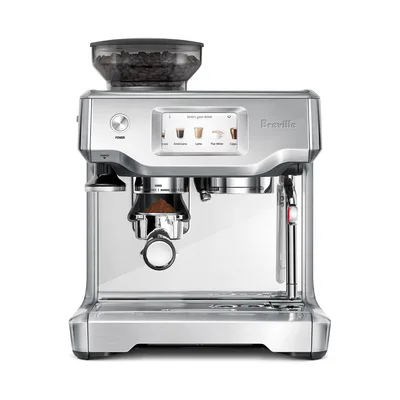
#4Breville Barista Touch semi-auto espresso machine, front view
Semi-automatic57/100 among semi-automatic machines

Grinder, ThermoJet and Auto MilQ automatic texturing behind a touchscreen — the least manual machine that still uses a portafilter.

  • Semi-automatic
  • ThermoJet
  • Grinder · 30 settings
  • 54mm portafilter
  • 3s heat-up
  • Steam wand
Pump:15 bar(marketing)·Brews at:~9 bar(what the coffee actually sees)
#5Breville Barista Touch Impress semi-auto espresso machine, front view
Semi-automatic46/100 among semi-automatic machines

Assisted tamping plus Auto MilQ with dedicated dairy, soy, almond and oat settings across eight texture levels.

  • Semi-automatic
  • ThermoJet
  • Grinder · 30 settings
  • 54mm portafilter
  • 3s heat-up
  • Steam wand
Pump pressure: — (not published by the manufacturer) · espresso extracts at ~9 bar regardless.
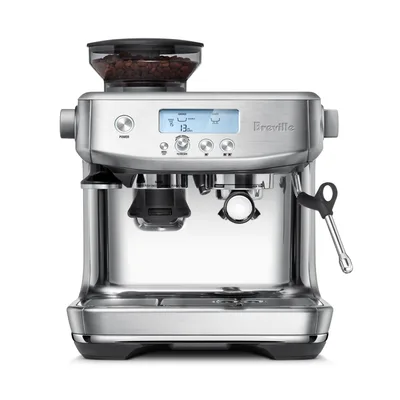
#6Breville Barista Pro semi-auto espresso machine, front view
Semi-automatic40/100 among semi-automatic machines

The Barista Express with ThermoJet instead of a thermocoil — three seconds to extraction temperature and 30 grind settings.

  • Semi-automatic
  • ThermoJet
  • Grinder · 30 settings
  • 54mm portafilter
  • 3s heat-up
  • Steam wand
Pump:15 bar(marketing)·Brews at:~9 bar(what the coffee actually sees)

Compact (bring your own grinder)

A single boiler or thermoblock and no grinder. Cheaper, smaller and entirely capable — on the condition that you budget for a burr grinder alongside it.

11 machines

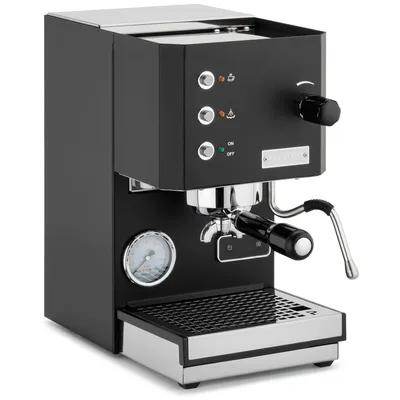
#1Profitec GO semi-auto espresso machine, front view
Semi-automatic78/100 among semi-automatic machines

A 0.3 litre insulated brass boiler with PID control in a 21 cm-wide body, heating up in about seven minutes.

  • Semi-automatic
  • Single boiler
  • PID
  • 58mm portafilter
  • 7 min heat-up
  • Commercial-style steam wand
Pump pressure: — (not published by the manufacturer) · espresso extracts at ~9 bar regardless.
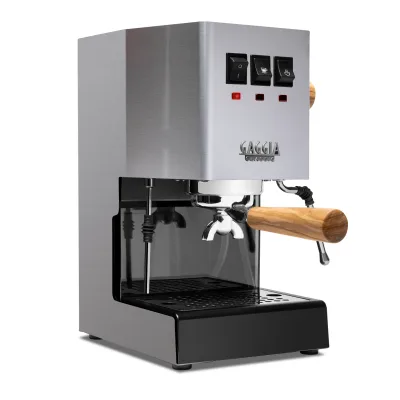
#2Gaggia Classic Pro E24 semi-auto espresso machine, front view
Semi-automatic65/100 among semi-automatic machines

A lead-free brass boiler and a 58 mm commercial portafilter, with the over-pressure valve set to 9 bar at the puck from the factory.

  • Semi-automatic
  • Single boiler
  • No PID
  • 58mm portafilter
  • Commercial-style steam wand
Pump:15 bar(marketing)·Brews at:~9 bar(what the coffee actually sees)
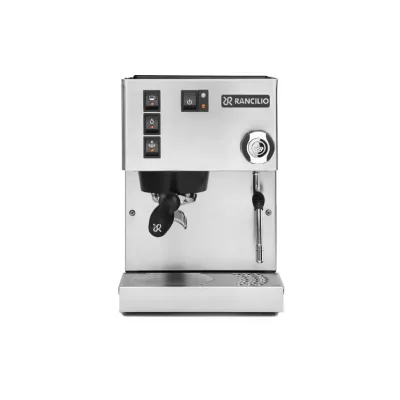
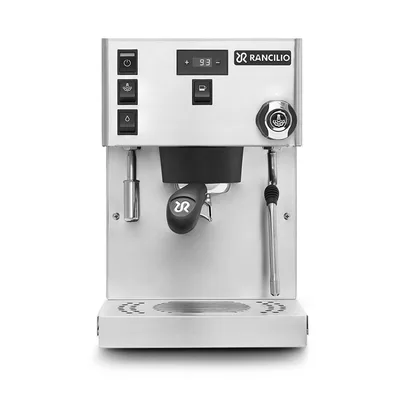
#3Rancilio Silvia semi-auto espresso machine, front view
Semi-automatic67/100 among semi-automatic machines

A 0.3 litre brass boiler and a brass commercial group in a 14 kg box — the reference for a home machine you can actually repair.

  • Semi-automatic
  • Single boiler
  • No PID
  • 58mm portafilter
  • Commercial-style steam wand
Pump pressure: — (not published by the manufacturer) · espresso extracts at ~9 bar regardless.
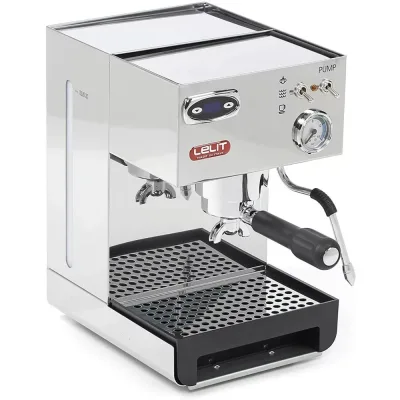
#4Lelit Anna PL41TEM semi-auto espresso machine, front view
Semi-automatic63/100 among semi-automatic machines

A 250 ml brass boiler with a PID controller and a pressure gauge, in a 7.5 kg body — prosumer specification, compact footprint.

  • Semi-automatic
  • Single boiler
  • PID
  • 57mm portafilter
  • Commercial-style steam wand
Pump pressure: — (not published by the manufacturer) · espresso extracts at ~9 bar regardless.
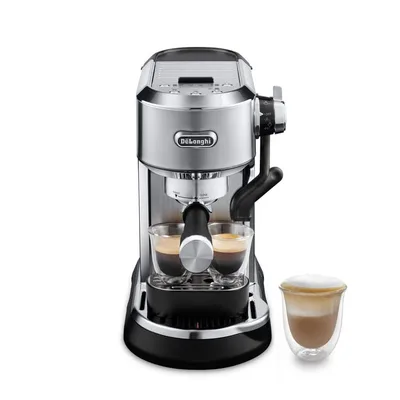
#5Dedica Maestro Plus Espresso Machine with Automatic Steam Wand — semi-auto espresso machine, front view
Semi-automatic68/100 among semi-automatic machines

A Dedica with an automatic steam wand — milk texturing without the learning curve, still in a compact body.

  • Semi-automatic
  • Steam wand
Pump:15 bar(marketing)·Brews at:~9 bar(what the coffee actually sees)
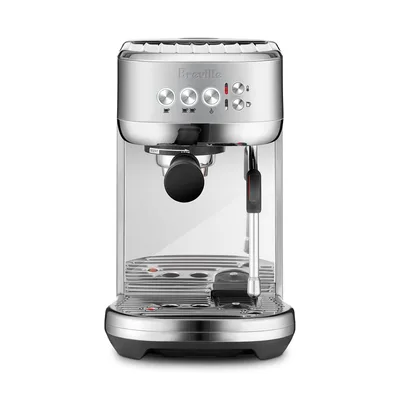
#6Breville Bambino Plus semi-auto espresso machine, front view
Semi-automatic39/100 among semi-automatic machines

A Bambino with the milk problem solved: the wand textures automatically across three temperatures and three foam levels.

  • Semi-automatic
  • ThermoJet
  • 54mm portafilter
  • 3s heat-up
  • Steam wand
Pump:15 bar(marketing)·Brews at:~9 bar(what the coffee actually sees)

Prosumer (heat exchanger, dual boiler, E61)

Commercial architecture in domestic dimensions: brewing and steaming at once, brass and stainless boilers, standard 58 mm parts. Heavy, slow to heat, and built to be repaired rather than replaced.

9 machines

#1Rancilio Silvia Pro X semi-auto espresso machine, front view
Semi-automatic59/100 among semi-automatic machines

Two boilers, two PIDs and adjustable 0–6 second soft infusion — the Silvia with the single-boiler compromise removed.

  • Semi-automatic
  • Dual boiler
  • PID
  • 58mm portafilter
  • Commercial-style steam wand
Pump pressure: — (not published by the manufacturer) · espresso extracts at ~9 bar regardless.
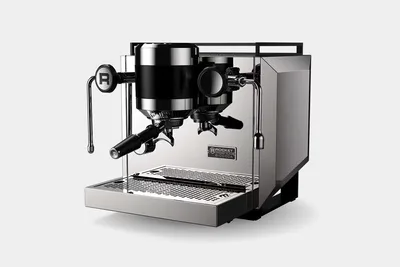
#2Rocket Espresso Bicocca semi-auto espresso machine, front view
Semi-automatic65/100 among semi-automatic machines

Double stainless boilers, a rotary pump and an electrically heated PID-controlled group in a 35 kg machine.

  • Semi-automatic
  • Dual boiler
  • PID
  • 58mm portafilter
  • 9 min heat-up
  • Commercial-style steam wand
Pump pressure: — (not published by the manufacturer) · espresso extracts at ~9 bar regardless.
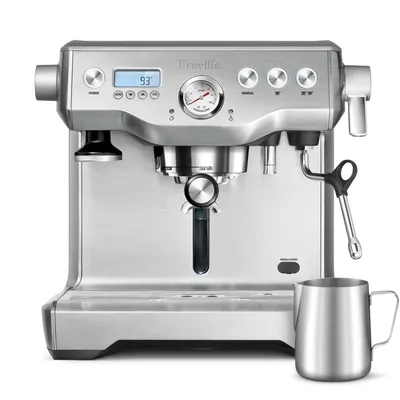
#3Breville Dual Boiler semi-auto espresso machine, front view
Semi-automatic53/100 among semi-automatic machines

Stainless dual boilers, PID and a 58 mm commercial portafilter — the point where Breville stops using its own 54 mm standard.

  • Semi-automatic
  • Dual boiler
  • PID
  • 58mm portafilter
  • Steam wand
Pump:15 bar(marketing)·Brews at:~9 bar(what the coffee actually sees)
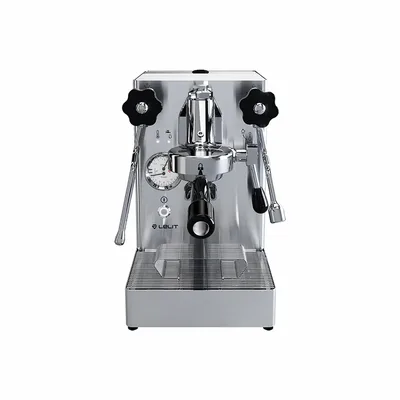
#4Lelit MaraX PL62X semi-auto espresso machine, front view
Semi-automatic54/100 among semi-automatic machines

A double-probe heat exchanger that regulates from group temperature rather than steam pressure — no surfing routine required.

  • Semi-automatic
  • Heat exchanger
  • PID
  • 58mm portafilter
  • Commercial-style steam wand
Pump pressure: — (not published by the manufacturer) · espresso extracts at ~9 bar regardless.
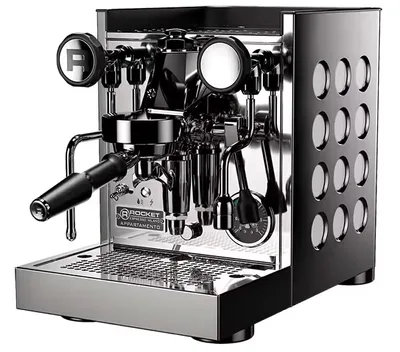
#5Rocket Espresso Appartamento TCA semi-auto espresso machine, front view
Semi-automatic54/100 among semi-automatic machines

The Appartamento with temperature control added — the same 1.8 litre heat exchanger, now adjustable rather than fixed.

  • Semi-automatic
  • Heat exchanger
  • PID
  • 58mm portafilter
  • Commercial-style steam wand
Pump pressure: — (not published by the manufacturer) · espresso extracts at ~9 bar regardless.
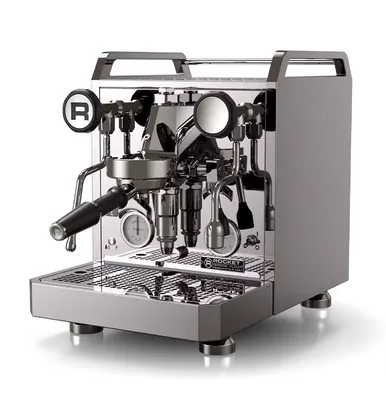
#6Rocket Espresso Mozzafiato FAST semi-auto espresso machine, front view
Semi-automatic48/100 among semi-automatic machines

A full-size 1.8 litre heat exchanger offered with either a vibration pump or a rotary pump and mains plumbing.

  • Semi-automatic
  • Heat exchanger
  • 58mm portafilter
  • Commercial-style steam wand
Pump pressure: — (not published by the manufacturer) · espresso extracts at ~9 bar regardless.

Compare every machine on this list

All machines on this ranking, sortable by score, price and key specifications
Machine
Profitec GO7878 (semi-automatic)$1,199Semi-automaticSingle boilerNoManual
Breville Oracle Jet6969 (semi-automatic)$2,000Semi-automatic45 settingsAutomatic
De'Longhi Dedica Maestro Plus6868 (semi-automatic)$426Semi-automatic15 bar → ~9 barNoAutomatic
Rancilio Silvia6767 (semi-automatic)$995Semi-automaticSingle boilerNoManual
Gaggia Classic Pro E246565 (semi-automatic)$451Semi-automaticSingle boiler15 bar → ~9 barNoManual
Rocket Espresso Bicocca6565 (semi-automatic)$5,890Semi-automaticDual boilerNoManual
Lelit Anna PL41TEM6363 (semi-automatic)Semi-automaticSingle boilerNoManual
Rancilio Silvia Pro X5959 (semi-automatic)$1,318Semi-automaticDual boilerNoManual
Breville Barista Touch5757 (semi-automatic)$957Semi-automaticThermoJet15 bar → ~9 bar30 settingsAutomatic
Breville Barista Express5555 (semi-automatic)$660Semi-automaticThermocoil15 bar → ~9 bar16 settingsManual
Lelit MaraX PL62X5454 (semi-automatic)Semi-automaticHeat exchangerNoManual
Rocket Espresso Appartamento TCA5454 (semi-automatic)$2,300Semi-automaticHeat exchangerNoManual
Breville Barista Express Impress5353 (semi-automatic)$800Semi-automaticThermocoil15 bar → ~9 bar25 settingsManual
Breville Dual Boiler5353 (semi-automatic)$1,700Semi-automaticDual boiler15 bar → ~9 barNoManual
De'Longhi La Specialista Maestro5050 (semi-automatic)$1,248Semi-automaticThermoblock8 settingsAutomatic
Rocket Espresso Mozzafiato FAST4848 (semi-automatic)$2,750Semi-automaticHeat exchangerNoManual
De'Longhi La Specialista Maestro with Cold Brew4747 (semi-automatic)$1,300Semi-automaticThermoblock19 bar → ~9 bar15 settingsAutomatic
Breville Barista Touch Impress4646 (semi-automatic)$1,500Semi-automaticThermoJet30 settingsAutomatic
De'Longhi Dedica Arte4646 (semi-automatic)$269Semi-automatic15 bar → ~9 barNoManual
De'Longhi Stilosa4343 (semi-automatic)$150Semi-automatic15 bar → ~9 barNoManual
Profitec JUMP4242 (semi-automatic)$2,059Semi-automaticHeat exchangerNoManual
Profitec PRO 4004242 (semi-automatic)$1,599Semi-automaticHeat exchangerNoManual
Breville Barista Pro4040 (semi-automatic)$835Semi-automaticThermoJet15 bar → ~9 bar30 settingsManual
Breville Bambino Plus3939 (semi-automatic)$500Semi-automaticThermoJet15 bar → ~9 barNoAutomatic
Ninja Luxe Café Premier3838 (semi-automatic)$599Semi-automatic25 settingsAutomatic
Rocket Espresso Appartamento3636 (semi-automatic)$1,975Semi-automaticHeat exchangerNoManual
De'Longhi La Specialista Arte Evo3333 (semi-automatic)$500Semi-automaticThermoblock15 bar → ~9 bar8 settingsManual
KitchenAid KES6551 Semi-Automatic Espresso Machine with Burr Grinder3333 (semi-automatic)Semi-automaticManual
Breville Bambino3232 (semi-automatic)$300Semi-automaticThermoJet15 bar → ~9 barNoManual
KitchenAid KES6503 Metal Semi-Automatic Espresso Machine2525 (semi-automatic)$250Semi-automaticThermocoilNoManual
De'Longhi La Specialista Arte2424 (semi-automatic)$500Semi-automaticThermoblock15 bar → ~9 bar8 settingsManual
De'Longhi Dedica Deluxe1919 (semi-automatic)$249Semi-automatic15 bar → ~9 barNoManual

The pump column shows the manufacturer's advertised figure and the ~9 bar that actually reaches the coffee.

What to look for

Boiler configuration is the structural decision. A single boiler brews and steams from the same vessel at different temperatures, so you wait between the two — perfectly workable for one or two drinks. A heat exchanger passes brew water through the steam boiler in a pipe, so both happen at once from one vessel. A dual boiler gives each job its own boiler and its own control. Cost, size and weight rise across that sequence, and so does the ability to make several milk drinks without pausing.

Boiler material follows closely. Brass and stainless steel hold heat; aluminium blocks and coils do not, which is why lighter machines drift more during a shot. This is also why a heavy machine takes ten minutes to heat and a light one takes three seconds — the same property, seen from two directions.

PID is worth paying for. Without it, a thermostat cycles the boiler above and below your target and the temperature at the puck depends on when in that cycle you pull. With it, you set a number and get that number.

Group size determines your accessory future. 58 mm is the commercial standard and every basket, tamper, screen and gasket fits it. Proprietary sizes work well but tie you to one catalogue.

Finally, look for adjustability that manufacturers publish: an adjustable over-pressure valve so you can set brew pressure at the puck, switchable or programmable pre-infusion, and a three-way solenoid valve so the group can be backflushed. Machines that publish these expect you to use them, which tells you what kind of machine you are buying.
Frequently asked

What is the difference between semi-automatic and automatic?
A semi-automatic runs the pump for as long as you hold the switch; you decide when the shot ends. An automatic stops the shot at a programmed volume. The brewing hardware can be identical — the difference is who decides when to stop.
Do I need a PID on a semi-automatic machine?
You do not need it, but it is the feature most likely to make consecutive shots taste the same. Without a PID the brew temperature depends on where the boiler is in its thermostat cycle when you pull.
How do I know what pressure my machine actually brews at?
The number on the box is pump pressure. Real brew pressure is set by the over-pressure valve, typically to around 9 bar. Machines with a brew pressure gauge show it directly; machines with an adjustable expansion valve let you change it.
How often should I backflush?
Weekly with water and roughly monthly with detergent is a common manufacturer recommendation, if the machine has a three-way solenoid valve. Machines without one cannot be backflushed at all.

Other rankings

Affiliate disclosure: as an Amazon Associate we earn from qualifying purchases. Rankings are computed from specifications and are never sold. Full disclosure.