espresso.compare

The Best Compact Espresso Machines for Small Kitchens

30 machines · Updated · Ranked on published specs

Counter space is the reason most apartment kitchens do not have an espresso machine, and the specification that decides it is width. This ranking filters on the manufacturers' published width and includes nothing wider than 260 mm. Two things are worth knowing before you shortlist by size alone. First, depth and height matter as much in practice: a machine that fits the width may still not fit under a wall cabinet, and several otherwise compact machines are surprisingly deep because the water tank sits behind the body. Check all three dimensions against the actual space, including the clearance needed to lift the tank lid. Second, compactness is usually bought with capacity. Narrow machines have smaller water tanks, smaller bean hoppers and smaller drip trays, so they need attention more often — a genuinely fine trade in a one- or two-person household, and a daily irritation in a busy one. What compactness does not have to cost you is quality: several machines here have brass boilers, PID control or commercial-standard groups in bodies under nine inches wide.

This list mixes machine types, so the ranking score is computed against the other machines on this page rather than within each type. Every card also shows the machine's within-type score, labelled with its type — that is the number to use when comparing it against others of the same kind.

The ranking

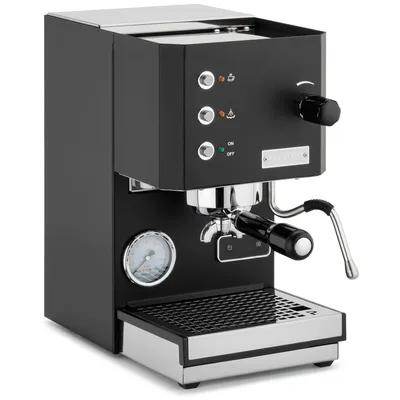
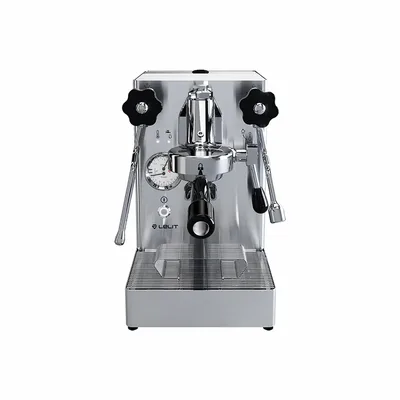
#1Lelit MaraX PL62X semi-auto espresso machine, front view
Semi-automatic54/100 among semi-automatic machines

A double-probe heat exchanger that regulates from group temperature rather than steam pressure — no surfing routine required.

  • Semi-automatic
  • Heat exchanger
  • PID
  • 58mm portafilter
  • Commercial-style steam wand
Pump pressure: — (not published by the manufacturer) · espresso extracts at ~9 bar regardless.
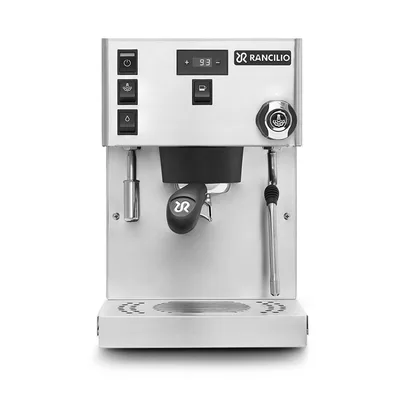
#2Rancilio Silvia Pro X semi-auto espresso machine, front view
Semi-automatic59/100 among semi-automatic machines

Two boilers, two PIDs and adjustable 0–6 second soft infusion — the Silvia with the single-boiler compromise removed.

  • Semi-automatic
  • Dual boiler
  • PID
  • 58mm portafilter
  • Commercial-style steam wand
Pump pressure: — (not published by the manufacturer) · espresso extracts at ~9 bar regardless.
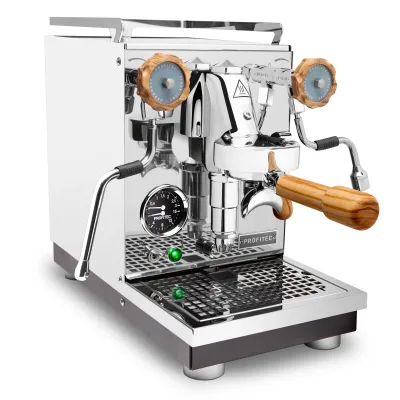
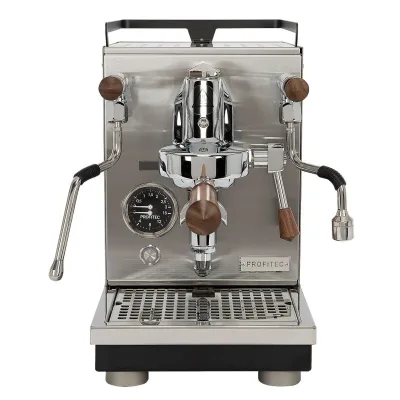
#3Profitec GO semi-auto espresso machine, front view
Semi-automatic78/100 among semi-automatic machines

A 0.3 litre insulated brass boiler with PID control in a 21 cm-wide body, heating up in about seven minutes.

  • Semi-automatic
  • Single boiler
  • PID
  • 58mm portafilter
  • 7 min heat-up
  • Commercial-style steam wand
Pump pressure: — (not published by the manufacturer) · espresso extracts at ~9 bar regardless.
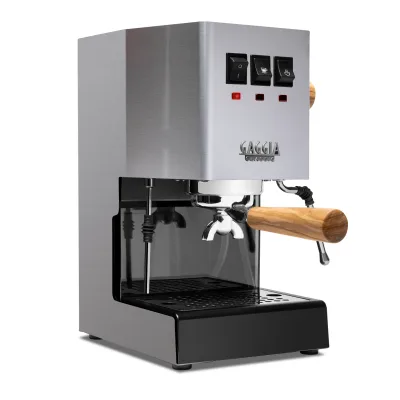
#4Gaggia Classic Pro E24 semi-auto espresso machine, front view
Semi-automatic65/100 among semi-automatic machines

A lead-free brass boiler and a 58 mm commercial portafilter, with the over-pressure valve set to 9 bar at the puck from the factory.

  • Semi-automatic
  • Single boiler
  • No PID
  • 58mm portafilter
  • Commercial-style steam wand
Pump:15 bar(marketing)·Brews at:~9 bar(what the coffee actually sees)
#5Profitec PRO 400 semi-auto espresso machine, front view
Semi-automatic42/100 among semi-automatic machines

A 1.6 litre stainless heat exchanger with three selectable PID temperatures, switchable pre-infusion and an adjustable expansion valve.

  • Semi-automatic
  • Heat exchanger
  • PID
  • 58mm portafilter
  • Commercial-style steam wand
Pump pressure: — (not published by the manufacturer) · espresso extracts at ~9 bar regardless.
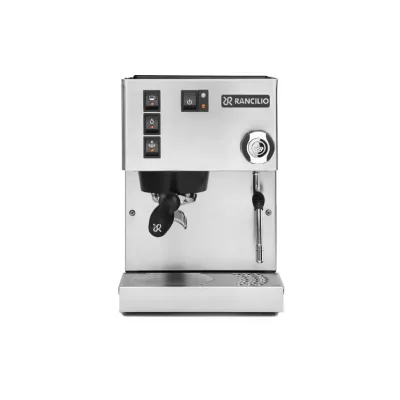
#6Rancilio Silvia semi-auto espresso machine, front view
Semi-automatic67/100 among semi-automatic machines

A 0.3 litre brass boiler and a brass commercial group in a 14 kg box — the reference for a home machine you can actually repair.

  • Semi-automatic
  • Single boiler
  • No PID
  • 58mm portafilter
  • Commercial-style steam wand
Pump pressure: — (not published by the manufacturer) · espresso extracts at ~9 bar regardless.
#7Profitec JUMP semi-auto espresso machine, front view
Semi-automatic42/100 among semi-automatic machines

The PRO 400 architecture with a low-noise vibration pump — same 1.6 litre stainless heat exchanger and three PID temperatures.

  • Semi-automatic
  • Heat exchanger
  • PID
  • 58mm portafilter
  • Commercial-style steam wand
Pump pressure: — (not published by the manufacturer) · espresso extracts at ~9 bar regardless.
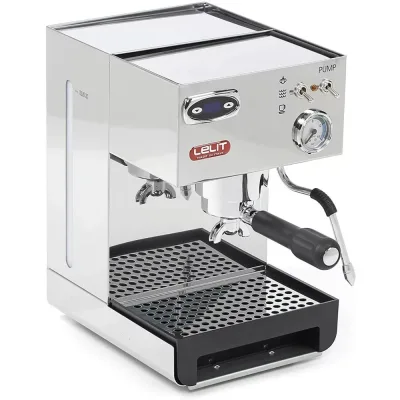
#8Lelit Anna PL41TEM semi-auto espresso machine, front view
Semi-automatic63/100 among semi-automatic machines

A 250 ml brass boiler with a PID controller and a pressure gauge, in a 7.5 kg body — prosumer specification, compact footprint.

  • Semi-automatic
  • Single boiler
  • PID
  • 57mm portafilter
  • Commercial-style steam wand
Pump pressure: — (not published by the manufacturer) · espresso extracts at ~9 bar regardless.
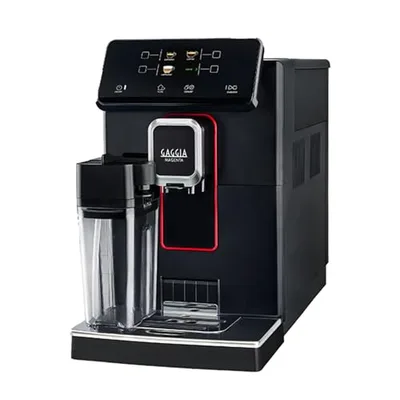
#9Gaggia Magenta Prestige bean-to-cup espresso machine, front view
Super-automatic62/100 among super-automatic machines

Under nine inches wide and 17 lb, with the same automatic 0.5 litre milk carafe as the rest of the Prestige line.

  • Super-automatic
  • Grinder · 5 settings
  • Automatic milk carafe
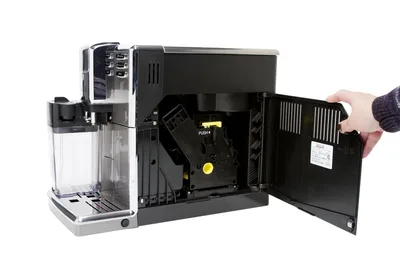
  • Removable brew group
Pressure managed automatically — brewing pressure is internal and not user-adjustable.
#10Gaggia Anima Prestige bean-to-cup espresso machine, front view
Super-automatic63/100 among super-automatic machines

Ceramic flat burrs and an integrated 0.5 litre milk carafe that froths automatically, in Gaggia's smallest super-auto body.

  • Super-automatic
  • Grinder · 5 settings
  • Automatic milk carafe
  • Removable brew group
Pressure managed automatically — brewing pressure is internal and not user-adjustable.

Compare every machine on this list

All machines on this ranking, sortable by score, price and key specifications
Machine
Lelit MaraX PL62X9554 (semi-automatic)Semi-automaticHeat exchangerNoManual
Rancilio Silvia Pro X8859 (semi-automatic)$1,318Semi-automaticDual boilerNoManual
Profitec GO8078 (semi-automatic)$1,199Semi-automaticSingle boilerNoManual
Gaggia Classic Pro E248065 (semi-automatic)$451Semi-automaticSingle boiler15 bar → ~9 barNoManual
Profitec PRO 4007842 (semi-automatic)$1,599Semi-automaticHeat exchangerNoManual
Rancilio Silvia7667 (semi-automatic)$995Semi-automaticSingle boilerNoManual
Profitec JUMP7642 (semi-automatic)$2,059Semi-automaticHeat exchangerNoManual
Lelit Anna PL41TEM7563 (semi-automatic)Semi-automaticSingle boilerNoManual
Gaggia Magenta Prestige6862 (super-automatic)$649Super-automatic5 settingsAutomatic
Gaggia Anima Prestige6663 (super-automatic)$849Super-automatic5 settingsAutomatic
Gaggia Cadorna Prestige6460 (super-automatic)$1,049Super-automatic10 settingsAutomatic
De'Longhi Eletta Evo6044 (super-automatic)Super-automaticThermoblock15 bar → ~9 bar13 settingsAutomatic
Philips Series 3200 LatteGo5753 (super-automatic)$548Super-automatic15 bar → ~9 bar12 settingsAutomatic
De'Longhi Eletta Explore5239 (super-automatic)$2,000Super-automaticThermoblock19 bar → ~9 bar13 settingsAutomatic
De'Longhi Magnifica Evo LatteCrema5035 (super-automatic)$68Super-automaticThermoblock15 bar → ~9 bar13 settingsAutomatic
De'Longhi Dinamica Plus4546 (super-automatic)$1,448Super-automatic19 bar → ~9 bar13 settingsAutomatic
De'Longhi Eletta4346 (super-automatic)$2,000Super-automatic13 settingsAutomatic
De'Longhi Dedica Maestro Plus4268 (semi-automatic)$426Semi-automatic15 bar → ~9 barNoAutomatic
De'Longhi Dinamica LatteCrema3935 (super-automatic)$1,400Super-automaticThermoblock15 bar → ~9 bar13 settingsAutomatic
De'Longhi Rivelia3835 (super-automatic)$1,500Super-automaticThermoblock19 bar → ~9 bar13 settingsAutomatic
De'Longhi Dedica Arte3546 (semi-automatic)$269Semi-automatic15 bar → ~9 barNoManual
Philips Series 22003543 (super-automatic)$400Super-automatic15 bar → ~9 bar12 settingsManual
De'Longhi Dinamica3327 (super-automatic)$900Super-automaticThermoblock15 bar → ~9 bar13 settingsManual
De'Longhi Magnifica XS2636 (super-automatic)$650Super-automatic13 settingsManual
De'Longhi Magnifica S Smart2136 (super-automatic)$1,092Super-automatic13 settingsManual
De'Longhi Magnifica Evo2133 (super-automatic)$750Super-automaticThermoblock15 bar → ~9 bar13 settingsManual
De'Longhi Stilosa2043 (semi-automatic)$150Semi-automatic15 bar → ~9 barNoManual
De'Longhi Dedica Deluxe1919 (semi-automatic)$249Semi-automatic15 bar → ~9 barNoManual
Nespresso Creatista Plus1760 (capsule)$700Capsule19 bar → ~9 barNoAutomatic
Nespresso Vertuo Plus1240 (capsule)$220CapsuleNoNone

The pump column shows the manufacturer's advertised figure and the ~9 bar that actually reaches the coffee.

What to look for

Measure the space before reading any list, and measure it three ways: width, depth including the water tank and any rear clearance, and height including the lid or hopper opening. Manufacturers publish body dimensions, not the space the machine needs to be used in. A machine needing four inches of overhead clearance to fill the tank effectively needs that clearance.

Then decide what you are willing to give up. In a compact machine the water tank is the usual sacrifice — often around one litre against two or more on a full-size machine. That is roughly four to six drinks between refills. Bean hoppers on compact bean-to-cup machines shrink similarly. Neither is a defect; both are a cadence you are agreeing to.

Think about where heat and steam go. A machine tucked under a cabinet vents steam upward into that cabinet every time you texture milk, and machines pushed against a wall need rear clearance for airflow. Both are common causes of regret that have nothing to do with the machine's specifications.

Consider whether the tank is front-accessible. On a machine that lives against a wall, a rear-filling tank means pulling the machine forward several times a week. Front-access tanks eliminate that entirely, and manufacturers do publish this.

Finally, do not assume compact means underpowered. Some of the narrowest machines in this database carry brass boilers with PID control or full commercial group hardware. Width is a packaging decision, not a performance one.
Frequently asked

What is the smallest espresso machine that still makes good espresso?
Several machines under six inches wide use standard 15 bar pumps and real steam wands. The compromise is water tank size and lack of a built-in grinder, not extraction quality.
Do compact machines have smaller water tanks?
Almost always. Expect roughly one to one and a half litres against two or more on a full-size machine, which is about four to six drinks between refills.
Can I put an espresso machine under a kitchen cabinet?
Check the height needed to open the water tank and bean hopper, not just the machine's own height, and remember that steam rises into whatever is above it. Both are the usual reasons a machine that technically fits turns out not to.
Is a compact machine worth it if I make several drinks a day?
The espresso will be as good; the refilling will not. Small tanks, small hoppers and small drip trays all mean more interruptions, which is the real cost of a small footprint.

Other rankings

Affiliate disclosure: as an Amazon Associate we earn from qualifying purchases. Rankings are computed from specifications and are never sold. Full disclosure.