espresso.compare

Philips vs De'Longhi

Brand comparison · 23 machines

Quick verdict

Two bean-to-cup ranges built on the same idea and different components. Philips standardises on 100% ceramic burrs, a 1.8 litre tank and the two-part LatteGo carafe across every series; De'Longhi varies grinder, milk system and heating by model, which means more choice and more to check.

Philips

Netherlands · founded 1891

Machines tracked
4
Published price range
not published
Types made
Super-automatic
With built-in grinder
4
Automatic milk
3
58 mm commercial group
0
PID temperature control
0
Highest scoring
Series 3200 LatteGo

De'Longhi

Italy · founded 1902

Machines tracked
19
Published price range
$150–$2,000
Types made
Semi-automatic, Super-automatic
With built-in grinder
15
Automatic milk
10
58 mm commercial group
0
PID temperature control
0
Highest scoring
Dedica Maestro Plus

Philips: warranty, parts and repairability

Philips publishes a two-year guarantee on its espresso machine leaflets.

Philips supports the range with AquaClean filters, guided descaling and per-model support pages; AquaClean is rated for up to 5,000 cups between descales.

The removable brew group is the key serviceability feature — it comes out for rinsing without tools. LatteGo has two dishwasher-safe parts and no internal milk tubing to clog.

De'Longhi: warranty, parts and repairability

De'Longhi publishes warranty terms per SKU on its US product pages and operates a US support centre with model-specific manuals.

De'Longhi runs a US support centre with downloadable manuals per SKU and sells first-party descaler, water filters and milk-system cleaner.

The automatic range uses a removable brew group that the owner rinses under the tap — the single biggest serviceability advantage over sealed super-autos. Descaler and AquaClean-style filters are stocked first-party.

Top Philips machines

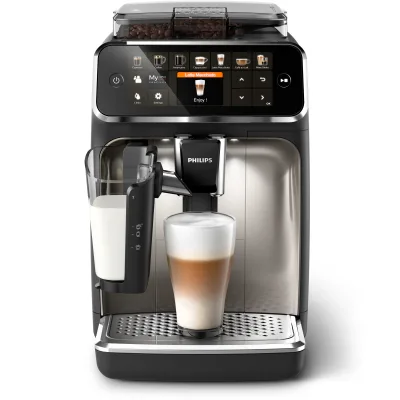
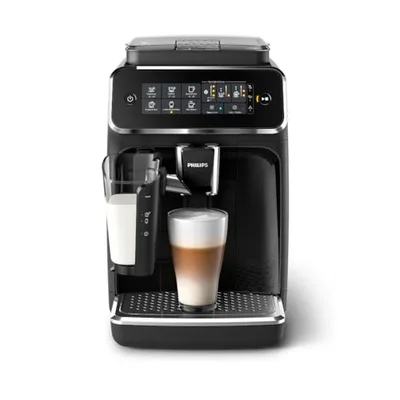
Philips Series 3200 LatteGo bean-to-cup espresso machine, front view
Super-automatic

Five drinks on a touch display, 12-step ceramic burrs, and up to 5,000 cups between descales with AquaClean.

  • Super-automatic
  • Grinder · 12 settings
  • Automatic milk carafe
  • Removable brew group
Pressure managed automatically — brewing pressure is internal and not user-adjustable (pump rated 15 bar).
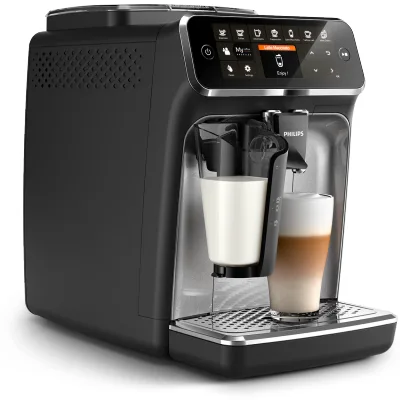
Philips Series 4300 LatteGo bean-to-cup espresso machine, front view
Super-automatic

Eight drinks, five aroma strengths and two user profiles on the same LatteGo platform — the middle of the Philips range.

  • Super-automatic
  • Grinder · 12 settings
  • Automatic milk carafe
  • Removable brew group
Pressure managed automatically — brewing pressure is internal and not user-adjustable.
Philips Series 5400 LatteGo bean-to-cup espresso machine, front view
Super-automatic

Twelve drinks, five aroma strengths and four user profiles — the widest menu Philips publishes for the LatteGo range.

  • Super-automatic
  • Grinder · 12 settings
  • Automatic milk carafe
  • Removable brew group
Pressure managed automatically — brewing pressure is internal and not user-adjustable.

Top De'Longhi machines

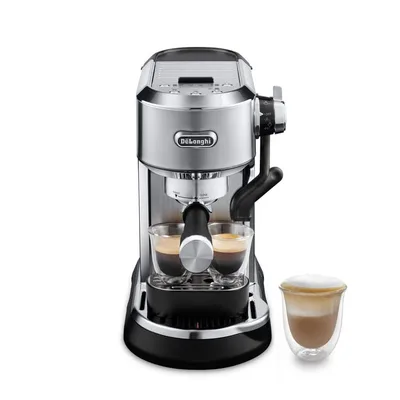
Dedica Maestro Plus Espresso Machine with Automatic Steam Wand — semi-auto espresso machine, front view
Semi-automatic

A Dedica with an automatic steam wand — milk texturing without the learning curve, still in a compact body.

  • Semi-automatic
  • Steam wand
Pump:15 bar(marketing)·Brews at:~9 bar(what the coffee actually sees)
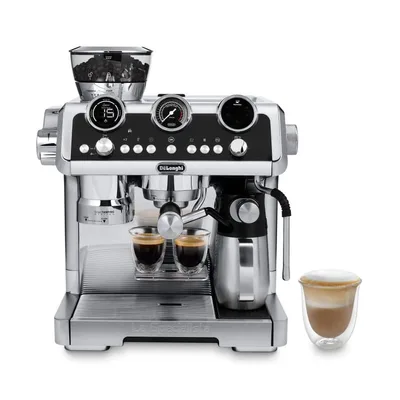
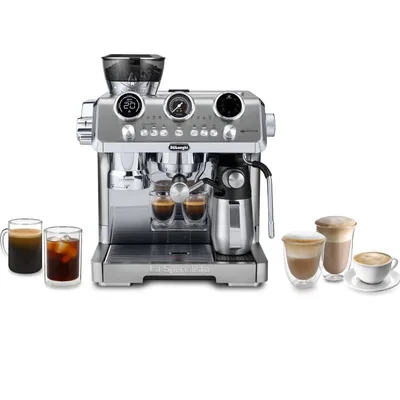
La Specialista Maestro — semi-auto espresso machine, front view
Semi-automatic

Two independent heating systems so brewing and steaming do not queue behind each other, with a twin-sensor grinder.

  • Semi-automatic
  • Thermoblock
  • Grinder · 8 settings
  • Steam wand
Pump pressure: — (not published by the manufacturer) · espresso extracts at ~9 bar regardless.

Frequently asked

Is Philips or De'Longhi better?
Two bean-to-cup ranges built on the same idea and different components. Philips standardises on 100% ceramic burrs, a 1.8 litre tank and the two-part LatteGo carafe across every series; De'Longhi varies grinder, milk system and heating by model, which means more choice and more to check.
Which brand has more machines with a built-in grinder?
Philips has 4 of 4 in our database; De'Longhi has 15 of 19.
Which is easier to get parts for?
Philips: The removable brew group is the key serviceability feature — it comes out for rinsing without tools. LatteGo has two dishwasher-safe parts and no internal milk tubing to clog. De'Longhi: The automatic range uses a removable brew group that the owner rinses under the tap — the single biggest serviceability advantage over sealed super-autos. Descaler and AquaClean-style filters are stocked first-party.