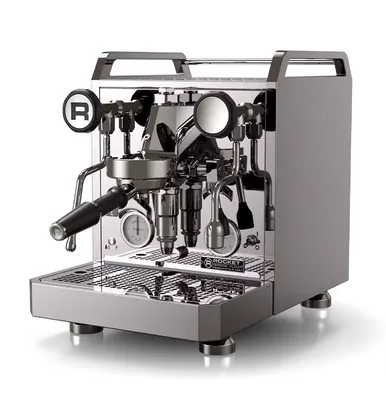
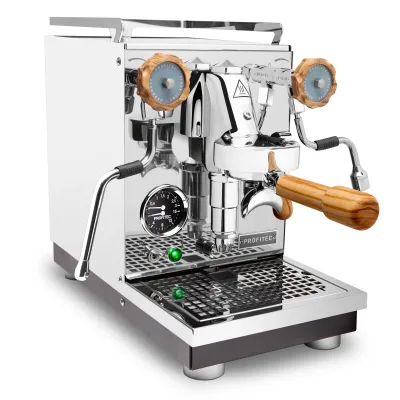
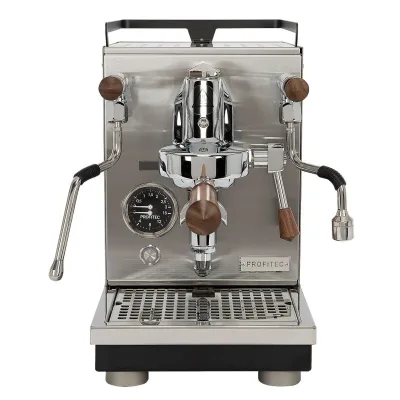
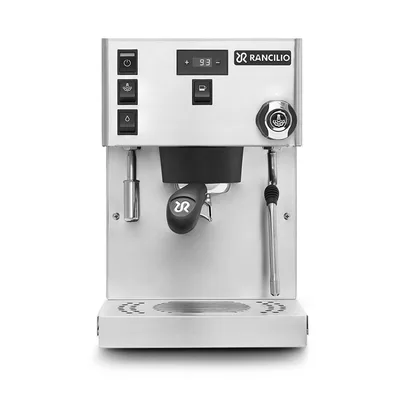
Rancilio Silvia Pro X
$1,318Two boilers, two PIDs and adjustable 0–6 second soft infusion — the Silvia with the single-boiler compromise removed.
- Semi-automatic
- Dual boiler
- PID
- 58mm portafilter
- Commercial-style steam wand
10 machines · Updated · Ranked on published specs
There is a point where a machine stops being an appliance and starts being equipment, and it is defined by duty rather than by price. A machine making fifteen drinks a day is doing roughly five thousand cycles a year: five thousand pump starts, five thousand heat-up and recovery cycles, five thousand compressions of a group gasket. Consumer machines are not designed against that number, which is why they tend to fail in the same places — pumps, solenoids, thermoblocks that scale shut. The machines in this ranking are filtered to those with a heat exchanger or dual boiler, a manufacturer volume rating of fifteen or more drinks a day, or a plumbing option, because each of those is a signal that the manufacturer designed for continuous duty rather than for a weekend. What you are really buying at this level is repairability: a 58 mm commercial group whose gaskets and screens are standard parts, a boiler that can be descaled rather than replaced, and a manufacturer that publishes exploded diagrams. The machines that last twenty years are not the ones that never break — they are the ones worth fixing.
This list mixes machine types, so the ranking score is computed against the other machines on this page rather than within each type. Every card also shows the machine's within-type score, labelled with its type — that is the number to use when comparing it against others of the same kind.

Two boilers, two PIDs and adjustable 0–6 second soft infusion — the Silvia with the single-boiler compromise removed.

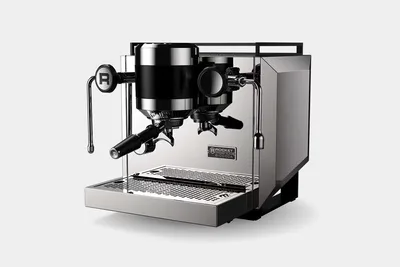
Double stainless boilers, a rotary pump and an electrically heated PID-controlled group in a 35 kg machine.

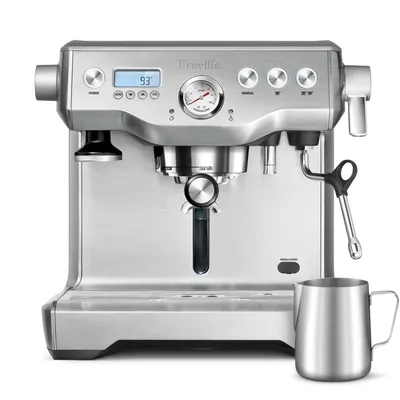
Stainless dual boilers, PID and a 58 mm commercial portafilter — the point where Breville stops using its own 54 mm standard.

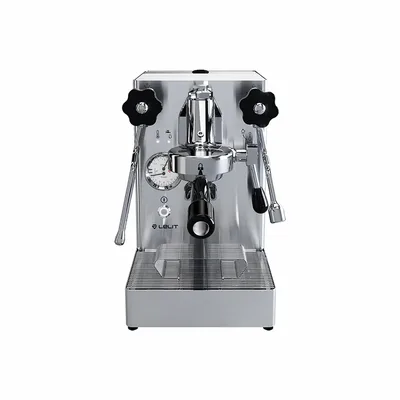
A double-probe heat exchanger that regulates from group temperature rather than steam pressure — no surfing routine required.

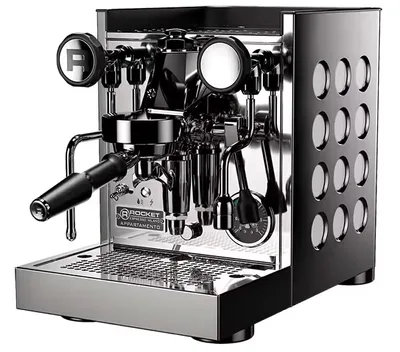
The Appartamento with temperature control added — the same 1.8 litre heat exchanger, now adjustable rather than fixed.

A full-size 1.8 litre heat exchanger offered with either a vibration pump or a rotary pump and mains plumbing.

A 1.6 litre stainless heat exchanger with three selectable PID temperatures, switchable pre-infusion and an adjustable expansion valve.

The PRO 400 architecture with a low-noise vibration pump — same 1.6 litre stainless heat exchanger and three PID temperatures.

A 1.8 litre heat exchanger in a 20 kg hand-assembled Milanese body, sized deliberately to fit a domestic counter.

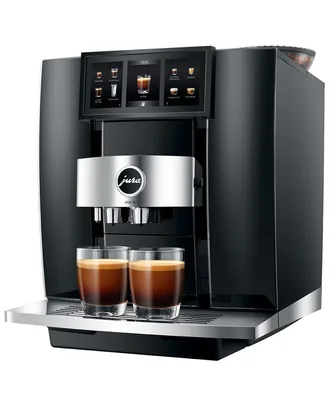
Two thermoblocks and two grinders, 35 specialties, 18 kg — this is JURA's office machine wearing a home badge.
| Machine | ||||||||
|---|---|---|---|---|---|---|---|---|
| Rancilio Silvia Pro X | 86 | 59 (semi-automatic) | $1,318 | Semi-automatic | Dual boiler | — | No | Manual |
| Rocket Espresso Bicocca | 83 | 65 (semi-automatic) | $5,890 | Semi-automatic | Dual boiler | — | No | Manual |
| Breville Dual Boiler | 75 | 53 (semi-automatic) | $1,700 | Semi-automatic | Dual boiler | 15 bar → ~9 bar | No | Manual |
| Lelit MaraX PL62X | 60 | 54 (semi-automatic) | — | Semi-automatic | Heat exchanger | — | No | Manual |
| Rocket Espresso Appartamento TCA | 57 | 54 (semi-automatic) | $2,300 | Semi-automatic | Heat exchanger | — | No | Manual |
| Rocket Espresso Mozzafiato FAST | 42 | 48 (semi-automatic) | $2,750 | Semi-automatic | Heat exchanger | — | No | Manual |
| Profitec PRO 400 | 38 | 42 (semi-automatic) | $1,599 | Semi-automatic | Heat exchanger | — | No | Manual |
| Profitec JUMP | 33 | 42 (semi-automatic) | $2,059 | Semi-automatic | Heat exchanger | — | No | Manual |
| Rocket Espresso Appartamento | 22 | 36 (semi-automatic) | $1,975 | Semi-automatic | Heat exchanger | — | No | Manual |
| JURA GIGA 10 | 5 | 75 (super-automatic) | $5,499 | Super-automatic | Thermoblock | 15 bar → ~9 bar | — | Automatic |
The pump column shows the manufacturer's advertised figure and the ~9 bar that actually reaches the coffee.
Thermal mass is the first thing to look for and the easiest to verify: weight. Brass and stainless boilers hold temperature through consecutive shots in a way a thermoblock cannot, and that stability is the difference between the tenth drink and the first tasting the same. It is also why these machines take ten minutes to heat up and are usually left switched on.
Separate steam capability is effectively mandatory at volume. A single boiler that must switch modes between brewing and steaming imposes a delay on every milk drink, which compounds unpleasantly across a morning. Heat exchangers and dual boilers remove it.
Check the pump. Vibratory pumps are fine for domestic duty and get noticeably tired under heavy use; rotary pumps are quieter, longer-lived and generally paired with a plumbing option. If a machine offers a rotary variant, that is the manufacturer telling you which version they expect to be worked.
Prioritise standard parts over clever features. A commercial 58 mm group means gaskets, screens, baskets and tampers from dozens of suppliers, now and in ten years. A proprietary group means one catalogue and one supplier's continued interest in stocking it.
Finally, plan for a maintenance routine rather than an event. Backflush weekly with water and monthly with detergent, descale on a schedule set by your water rather than by the machine's counter, and replace the group gasket when the portafilter starts creeping past its usual position. Machines at this level reward that discipline with decades; machines at any level punish its absence.
Affiliate disclosure: as an Amazon Associate we earn from qualifying purchases. Rankings are computed from specifications and are never sold. Full disclosure.